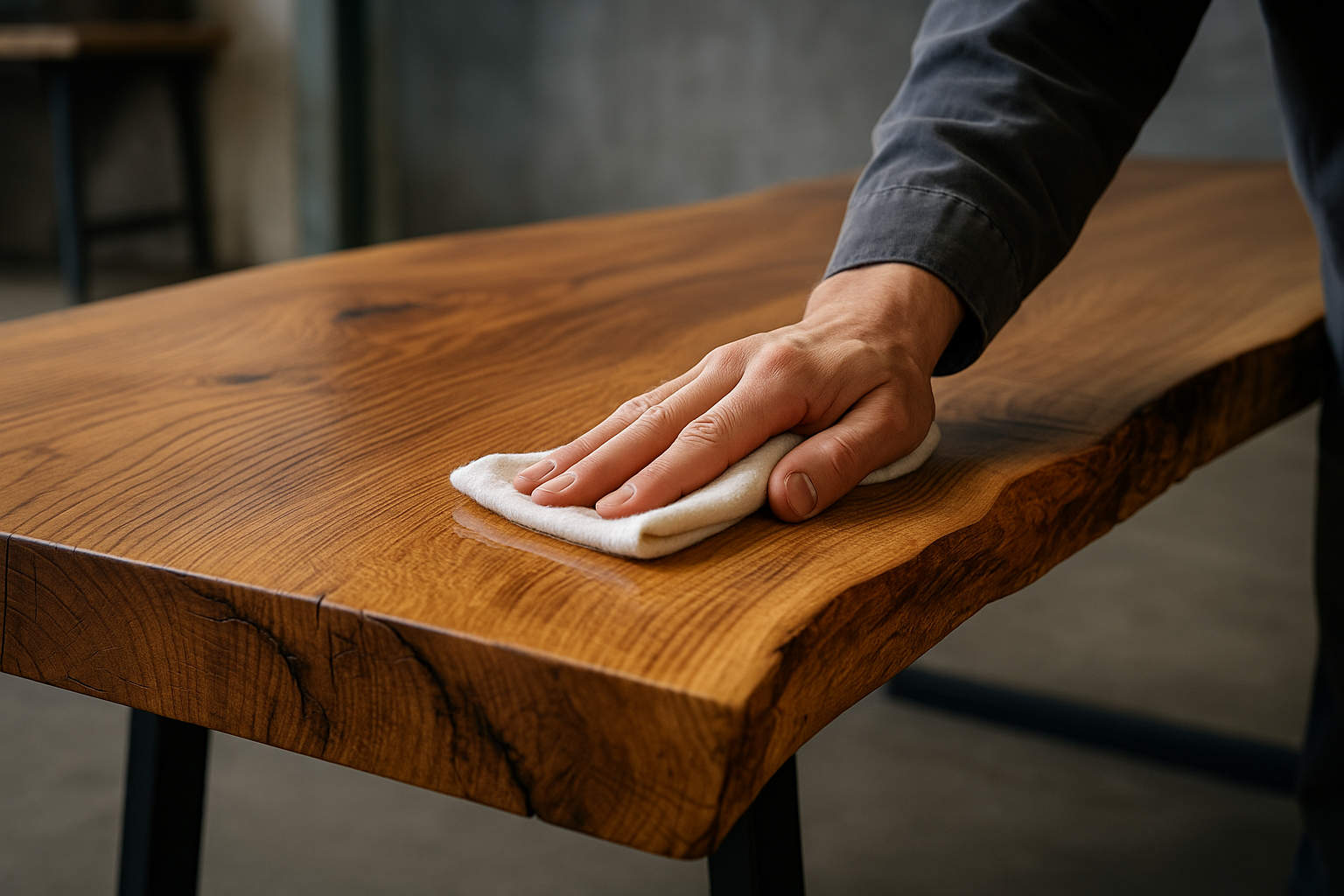
Solid wood furniture has a special appeal that goes far beyond its practical purpose. Its warm tone, lively grain and pleasant feel reflect its natural origin and craftsmanship. To preserve this beauty for many years, oiled solid wood requires care that is gentle, suitable for the material and carried out regularly. This guide explains how to clean and refresh oiled surfaces properly and how to repair small signs of everyday use yourself.
Why oiled wooden surfaces are so durable
Oiled wooden surfaces owe their resilience to a combination of deep-acting care and natural breathability. The oil penetrates the pores of the wood, strengthens the fibres from within and still allows the material to remain open and flexible. This means the wood can continue to react to humidity and temperature fluctuations without becoming brittle.
The ease of repair of oiled surfaces is particularly valuable. Small scratches, dull areas or pressure marks can usually be treated selectively without having to renew the entire surface. Over time, this creates a natural patina that deepens the character of the furniture.
Cleaning solid wood properly – gentle and effective
For daily cleaning of oiled wooden surfaces, a soft, slightly damp cloth is sufficient. The key is not to dry out or damage the surface. Microfibre cloths, aggressive cleaners or abrasive sponges should be avoided, as they can dry out or damage the surface.
The following applies:
- wipe only with a damp cloth, never wet
- always polish dry afterwards
- do not use aggressive household cleaners
- avoid microfibre cloths
- remove stains as soon as possible
For heavier soiling, mild cleaners for oiled wood are suitable.
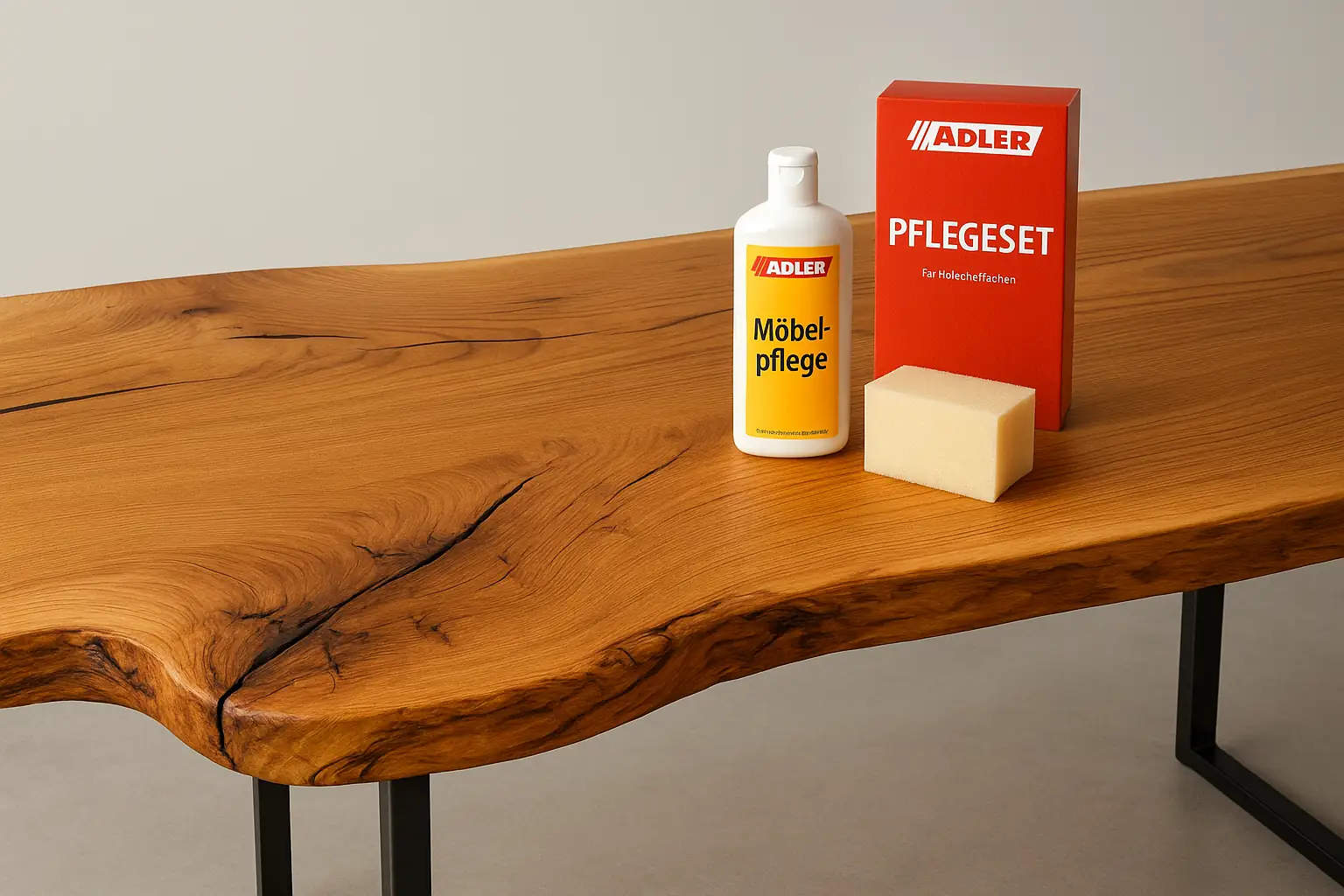
Care sets for oiled wood – reliable and tried and tested in practice
For thorough and regular care, high-quality wood care sets have proven effective. One example is the ADLER Legno Care Set , which combines all essential products for professionally cleaning, lightly sanding and nourishing oiled surfaces.
A care set typically includes:
- wood care oil for refreshing the surface
- a suitable cleaner
- sanding fleece
- polishing cloths
This coordinated combination ensures even and long-lasting care.
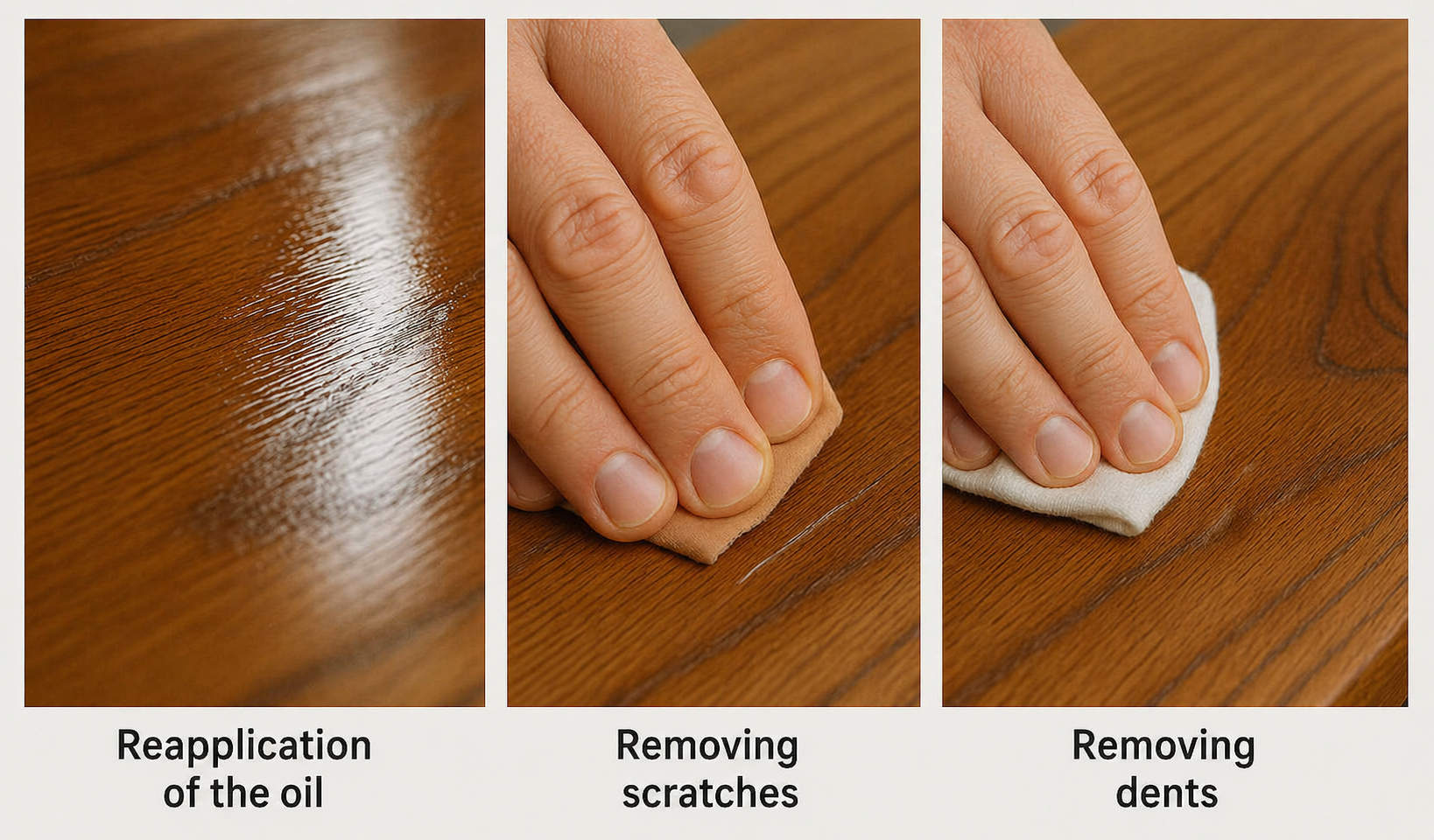
Refreshing an oiled wooden surface – step by step
Over time, even well-maintained solid wood loses some of its protective effect. Refreshing restores the saturation of the wood and brings back its natural sheen.
The refresh process takes just a few steps:
- clean the surface thoroughly
- apply care oil thinly and evenly
- allow it to absorb
- polish off excess oil
Afterwards, the wood once again reveals its full depth, vitality and pleasant feel.
Removing scratches – precise and gentle
Scratches are among the most common signs of use on oiled solid wood, but in most cases they can be repaired carefully. Fine scratches can often be smoothed with a sanding fleece. For deeper marks, careful sanding along the grain is necessary. After removing the sanding dust, the area is treated with wood oil, allowing the colour and surface to blend in harmoniously again.
Massaging out dents – gently raising the wood fibres again
Pressure marks often occur due to short-term strain. Many of these dents can be effectively reduced through a combination of moisture and heat. The wood fibres begin to rise, making the indentation visibly flatter. Once the area has dried completely, it should be oiled to restore the protective layer.
Treating stains – thorough and suitable for the material
Stains on oiled solid wood can often be removed without difficulty. Surface dirt can be cleaned with a suitable wood cleaner. If stains have penetrated more deeply, very careful sanding followed by re-oiling is recommended, allowing the treated area to blend in naturally again.
Conclusion
Oiled solid wood is a durable, easy-care and repair-friendly natural material. Regular cleaning, occasional re-oiling and the early repair of small signs of use help furniture retain its expressive character for decades. Treating oiled wood with care preserves a piece of furniture that gains character over the years while retaining its natural warmth.