
The right table size determines comfort and functionality in everyday life. Ergonomic dimensions create enough space for guests and tableware. Width, length and height determine how pleasant a table is to use. This guide shows the ideal proportions for dining tables and work tables.
A table is far more than just a surface – it is a meeting point, a workstation, a dining area and the centre of everyday living. To fulfil all these functions, its proportions should be chosen carefully. The ideal table size depends on the number of people, the available space and ergonomic criteria. This guide explains how to determine the right table width, table length and table height for maximum comfort.
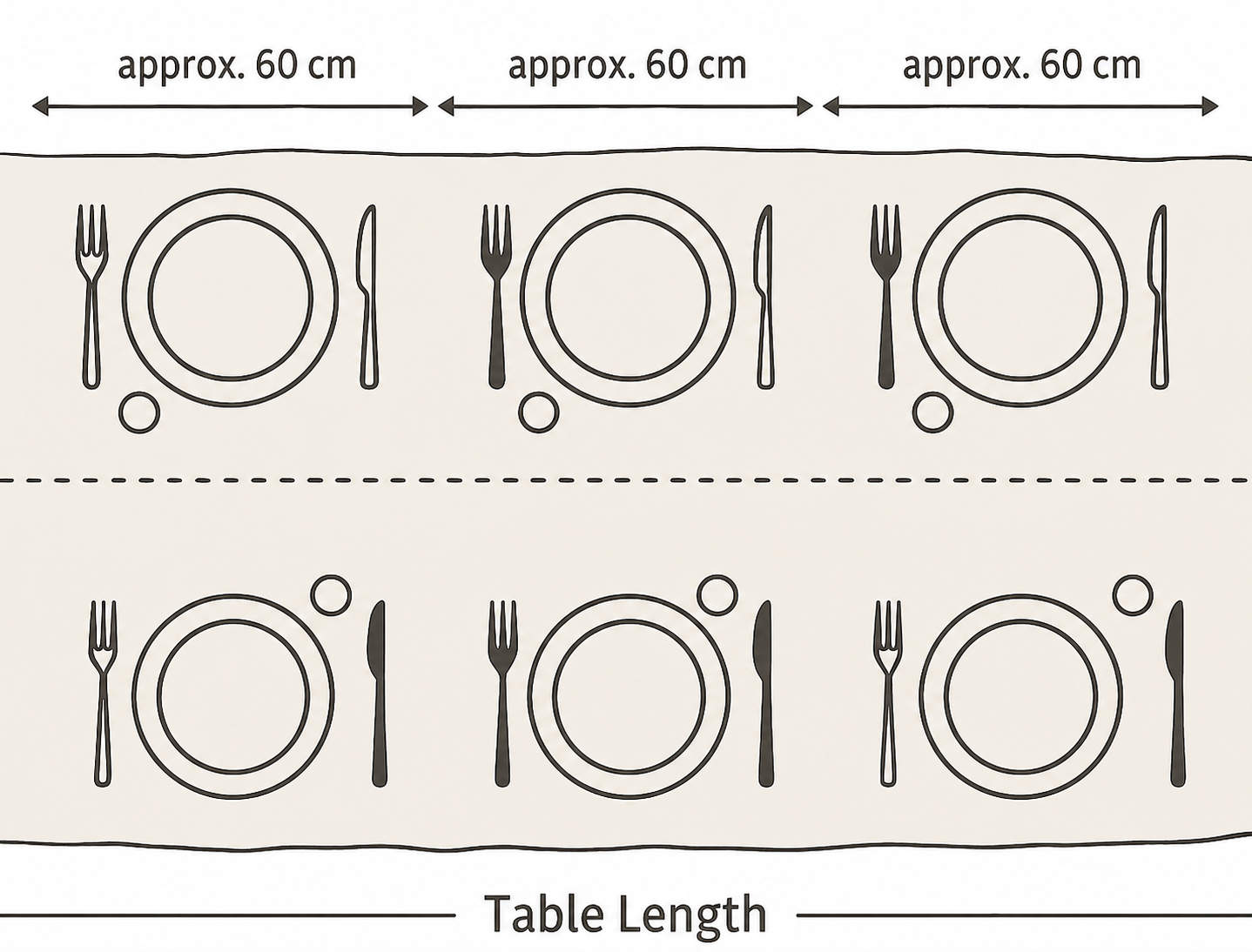
Table width & table length: how much space does one person need?
To ensure that each person can sit and eat comfortably, around 60 cm in length should be planned per seat. This value has proven ideal for providing sufficient freedom of movement.
In terms of depth, a place setting requires around 35 cm per side. To allow bowls, platters or decorations to be placed comfortably in the centre of the table, an additional middle area of at least 20 cm should also be planned.
Recommendation for common table widths: 85–100 cm
These dimensions provide enough space for:
- two opposite place settings
- comfortable placement of serving dishes
- pleasant freedom of movement for arms and upper body
The schematic illustration shows:
approx. 60 cm length per person, approx. 35–40 cm depth at each side.
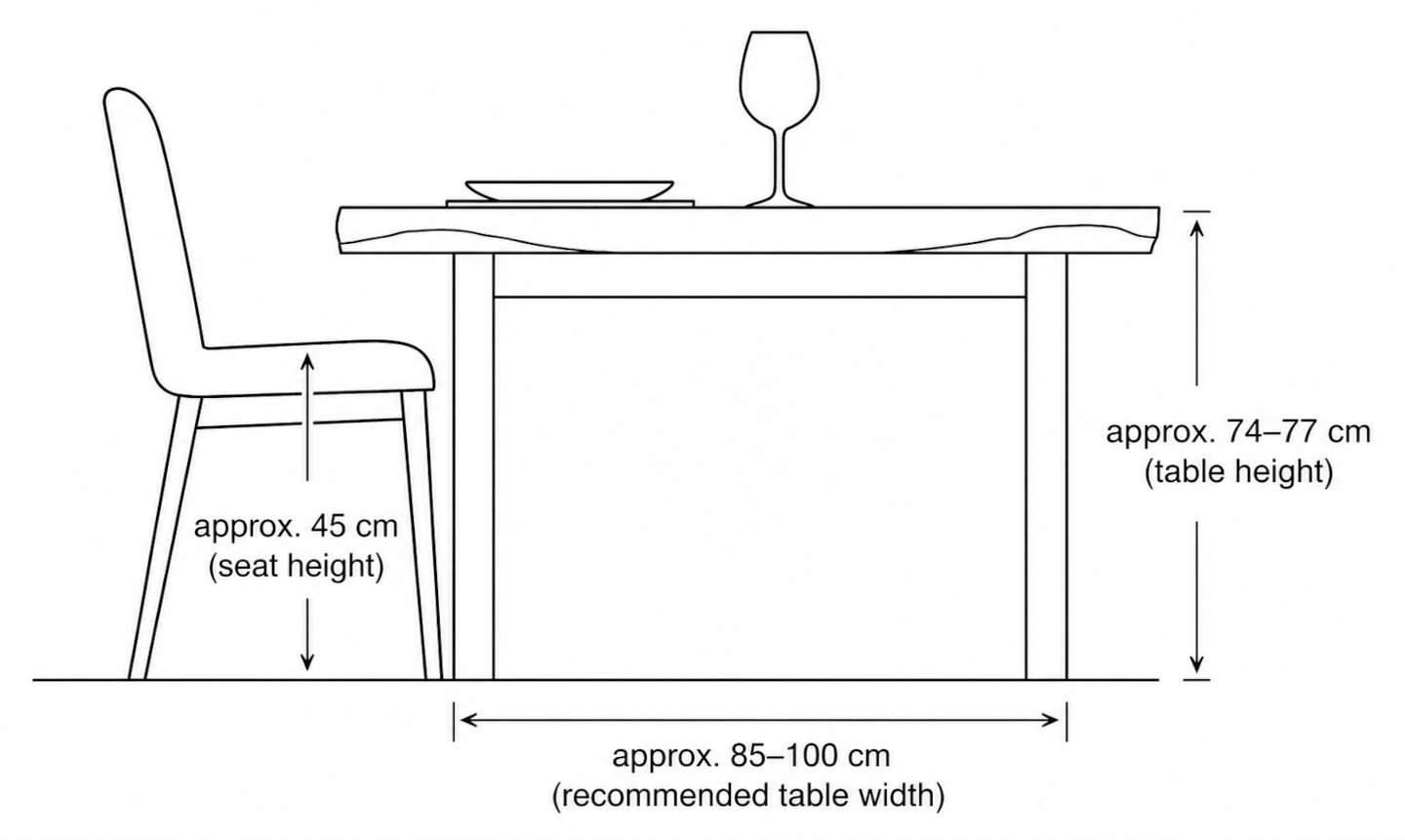
Table height: ergonomic sitting starts with the right height
For comfortable and ergonomic sitting, table height plays a central role. The common standard height is 76 cm. This height is designed to match most commercially available chairs with a seat height of 45 cm.
Modern living situations, however, have become more varied. That is why tables can often now be configured in other heights – for example for standing tables, bar areas or particularly low seating arrangements.
For classic dining areas, the following applies:
A comfortable table height is between 74–77 cm. This leaves enough legroom without making the arm angle while eating unnaturally high or low.
Why the right dimensions are so important
A table that is too large can quickly appear bulky and make communication more difficult. A table that is too small, on the other hand, creates a cramped feeling and can cause dishes to collide or leave no room for serving platters.
The ideal dimensions ensure that:
- all people can sit comfortably at the same time
- there is sufficient distance between place settings
- the tabletop fits harmoniously into the room
- movements — such as standing up and sitting down — are not restricted
They create a balance between functionality, aesthetics and living comfort.
Conclusion
The right table size is never a matter of chance, but the result of clear ergonomic guidelines. Around 60 cm length per person, a table width of 85–100 cm and a height of 74–77 cm help ensure that all guests feel comfortable and that the table can fully serve its purpose.
Anyone who follows these basic rules creates a dining table or work table that not only looks good, but also brings everyday enjoyment.